Where the energy
reaches
Ultrasound energy delivered in parallel to the mid dermis.
Sofwave uses several transducers to deliver energy in parallel at a mid-dermal depth.
Integrated cooling protects the epidermis at the surface, and because the deep layer is not addressed directly, the recovery burden tends to be comparatively light.
Seven ultrasound beams,
side by side in the dermis
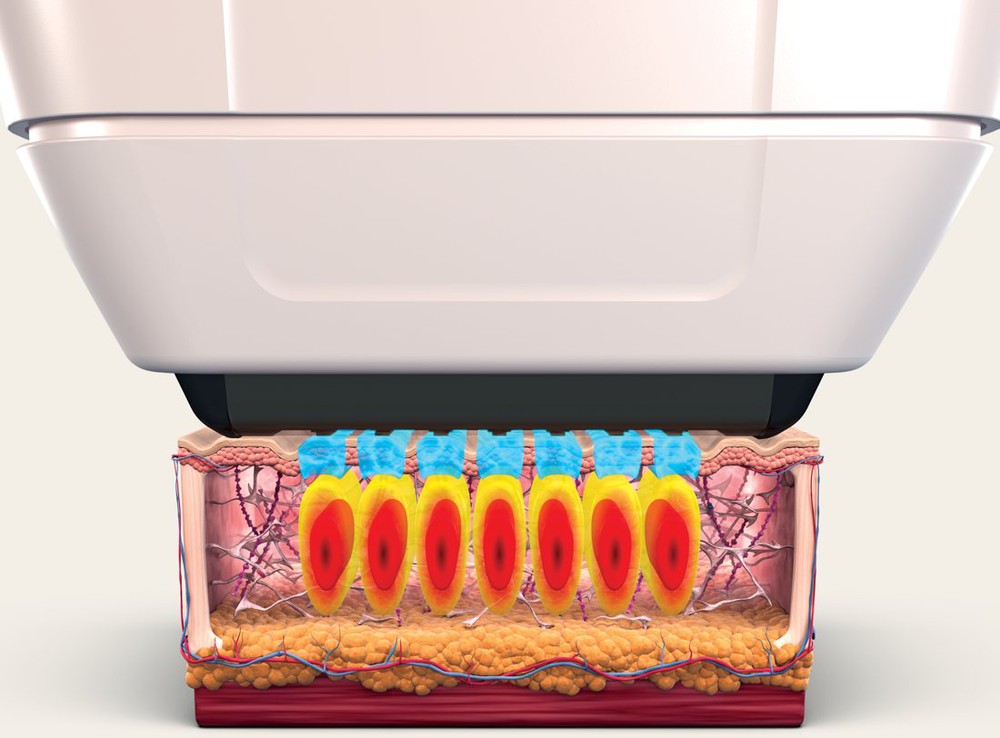
Rather than focusing ultrasound on a single point, several beams are sent in parallel at the same time.
SUPERB™ (Synchronous Ultrasound Parallel Beam) is Sofwave’s own technology.
Instead of focusing on one point it sends several beams side by side, treating the mid dermis broadly and evenly.
Transducers emitting energy at once
Centre depth of the thermal effect (confined to a 0.5–2mm range)
Target temperature in the dermis
Size of one cylindrical heat zone (seven formed per pulse)
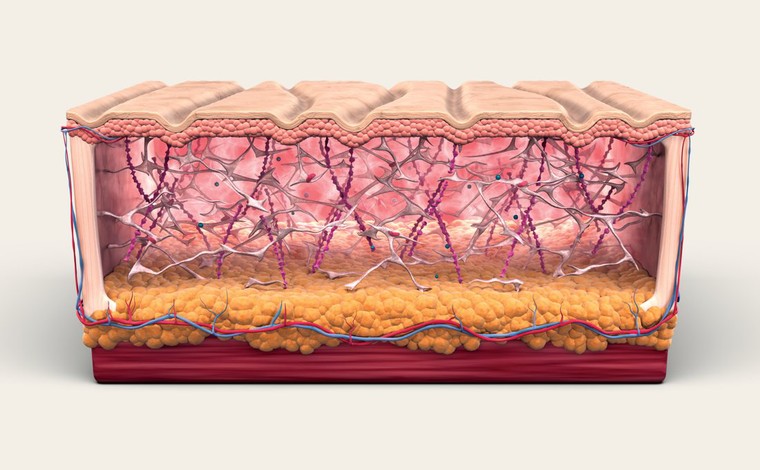
Collagen declines with age, falling by about 60% by the age of 60. Elastin stops being produced from the twenties, and the skin begins to lose firmness and sag.
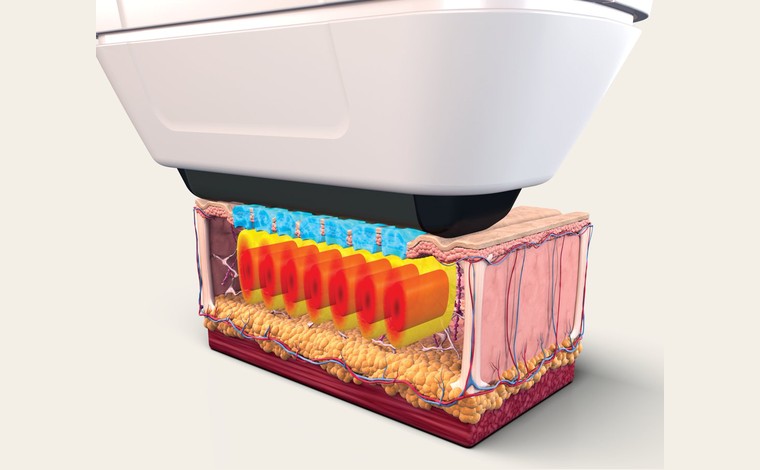
Seven transducers emit energy at the same time, forming cylindrical heat zones 1.5mm deep, parallel to the skin surface. Undamaged tissue remains between the zones, giving a fractional effect.
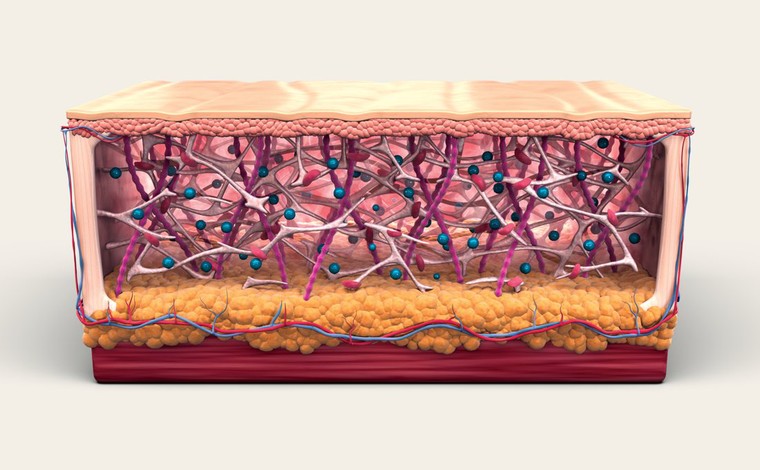
The heat zones stimulate a wound-healing response that leads to new collagen and elastin, thickening the skin and improving fine lines and wrinkles.
One pulse —
cool, warm, then cool again
Conventional HIFU can hardly use integrated cooling, because the cooling unit interferes with ultrasound delivery.
With Sofwave the transducer touches the skin directly, so surface cooling and real-time skin temperature measurement run during treatment.
Feedback-controlled integrated cooling, Sofcool™, together with real-time skin temperature measurement, keeps the epidermis undamaged.
Ultrasound energy does not travel deeper than 2mm, so it does not affect nerves, bone, blood vessels or facial fat.
A wide contact surface and parallel beams deliver energy evenly across a broad area in a single pulse.
Ultrasound absorption is determined by the mechanical properties of tissue and is unrelated to skin colour or pigment.
Not collagen
alone
The dermis holds not only collagen but elastin and hyaluronic acid as well.
Sofwave is designed to warm the dermis into the high 60s for about 4 seconds, denaturing collagen partially rather than completely.
Heat that is too high contracts collagen fully, and almost no elastin is then produced.
Collagen · the supporting structure of skin
Elastin · elasticity, the hardest component to build
Hyaluronic Acid · moisture and dermal thickness
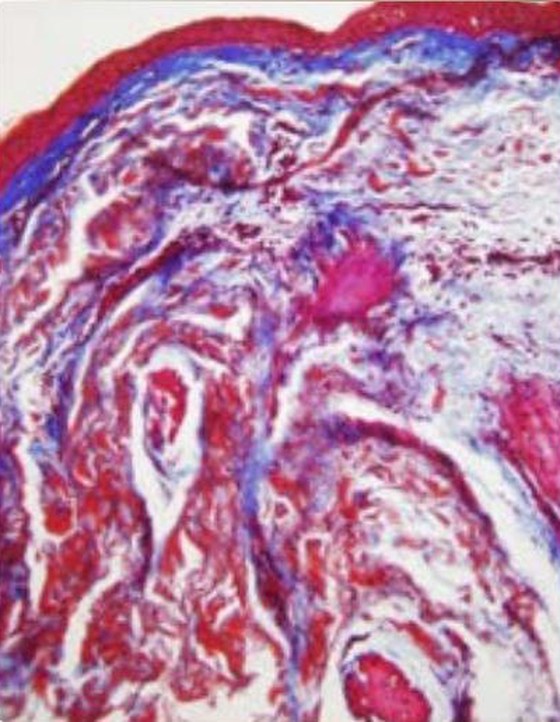
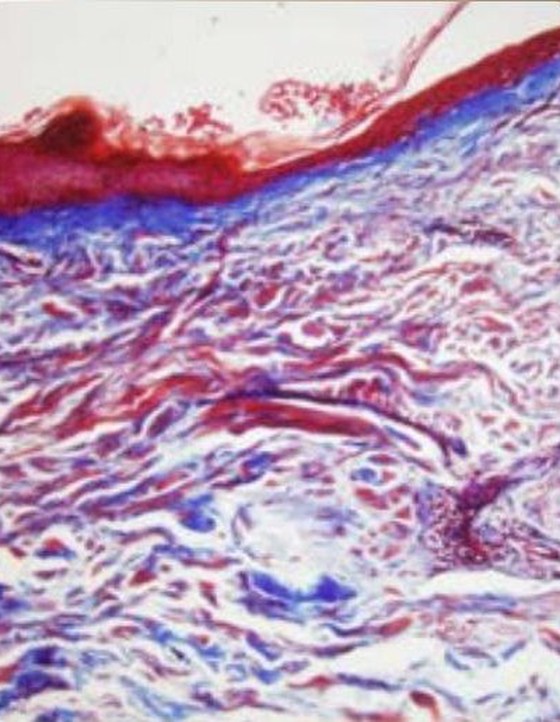
Elastin and collagen increased significantly, and the density of connective tissue and the arrangement of the dermal structure improved.
※ Human histology · single treatment · 10-month follow-up. Manufacturer clinical data; results and progress vary from person to person.
What sets it apart
from other lifting
Even when the same dermis is treated, the shape the energy takes is different.
Sofwave forms cylindrical heat zones parallel to the skin surface — seven at a time, 1.5mm deep.

A 1×1mm point shape, with the beam delivered one point at a time.
Seven 1.5×4mm cylindrical zones are created at once, treating about 49.5mm3 in a single pulse.
※ NIRF: non-invasive radiofrequency. The figures above are general references for each technology and vary with the device and its settings.
We suggest it for
A good choice for those who want a lower recovery burden with consistent care.
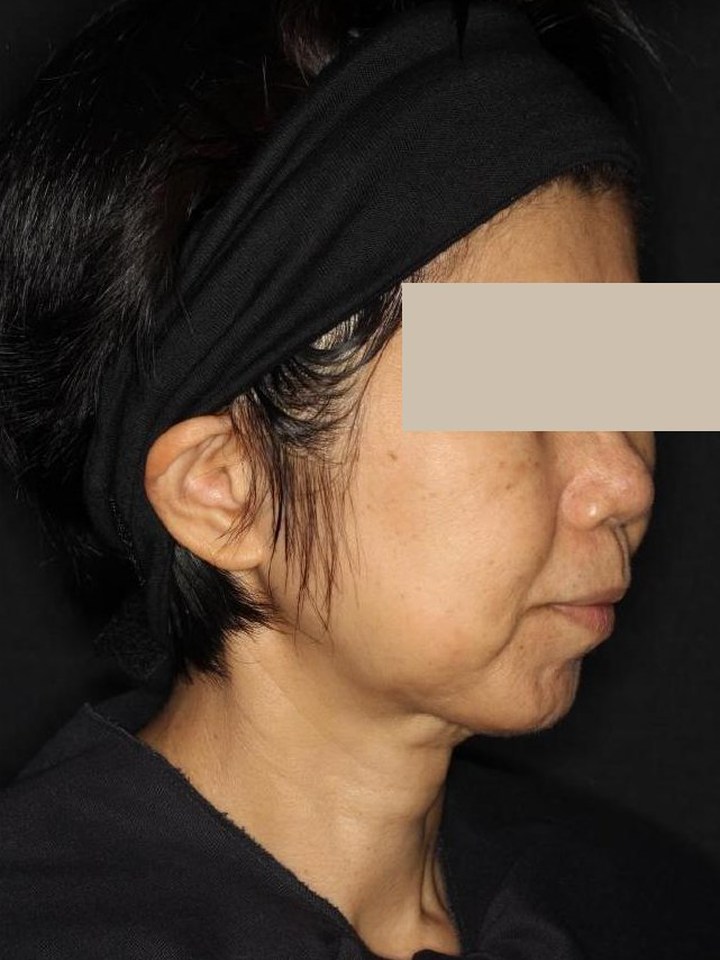
After a single treatment
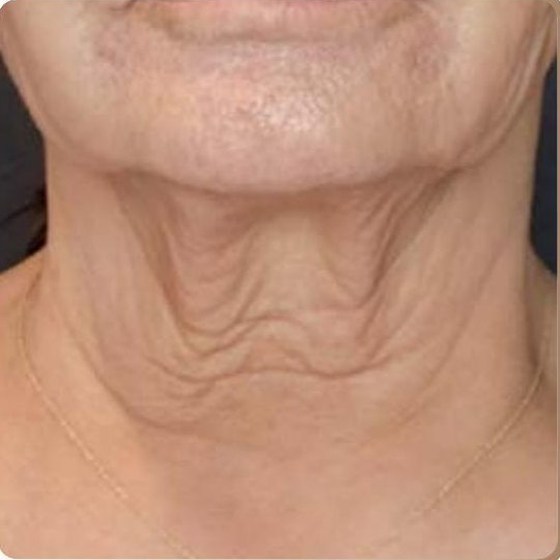
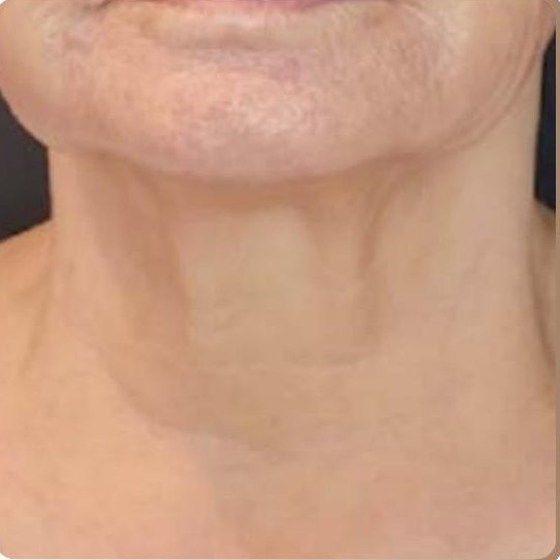
The changes that follow over time after a single treatment.
Elasticity across the whole face
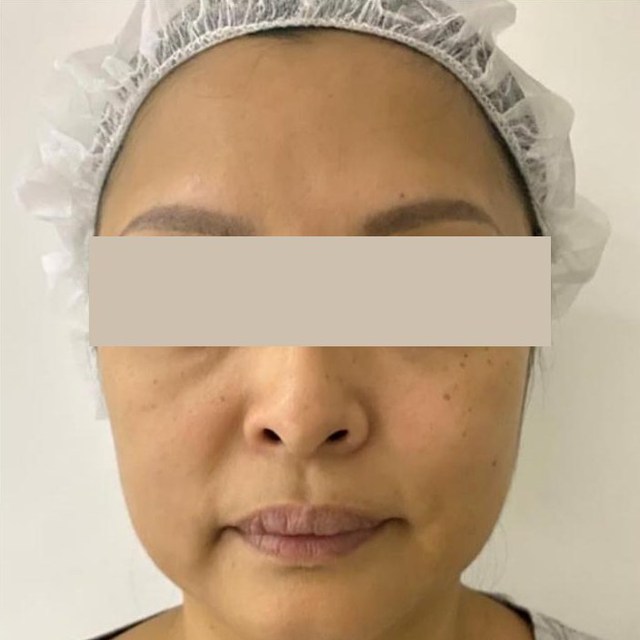
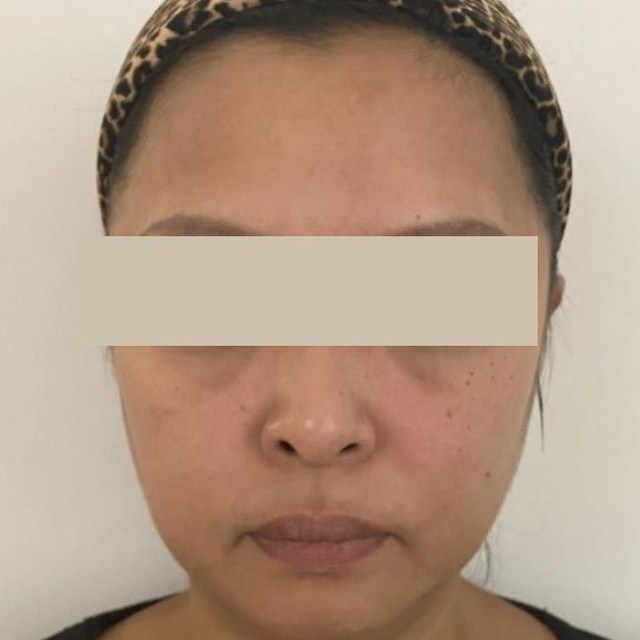
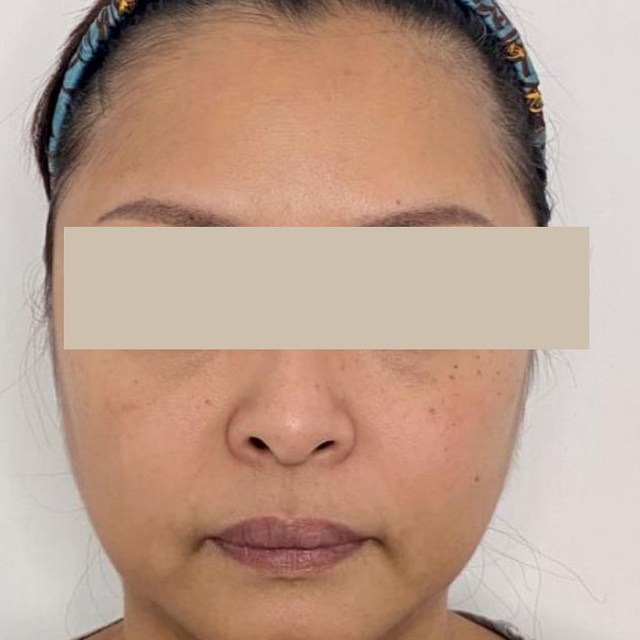
Jawline · submental
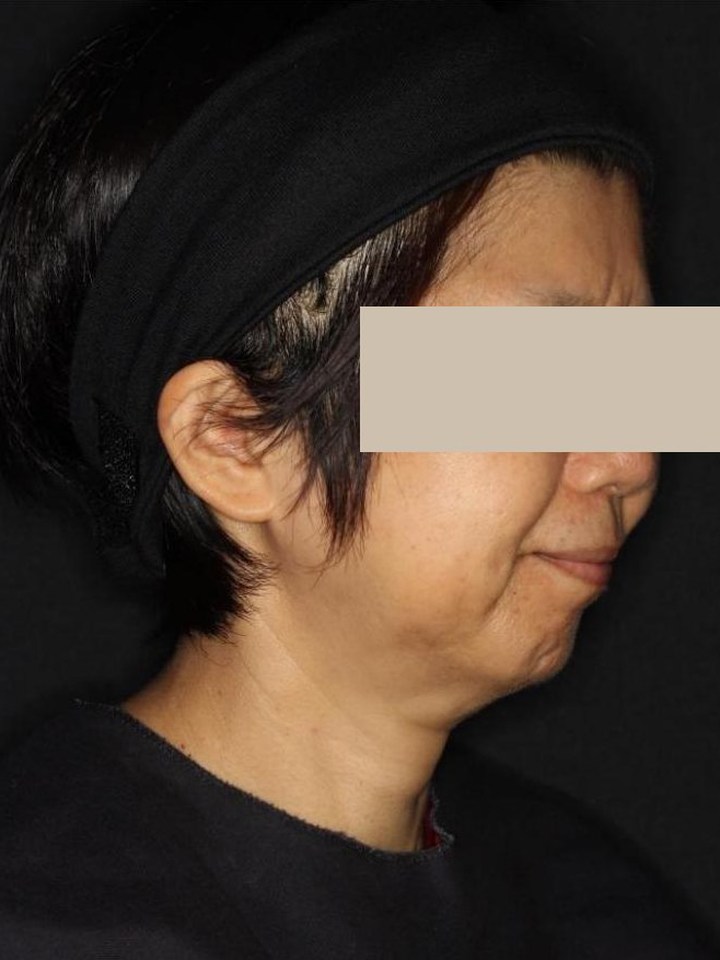
Neck wrinkles
Acne scarring
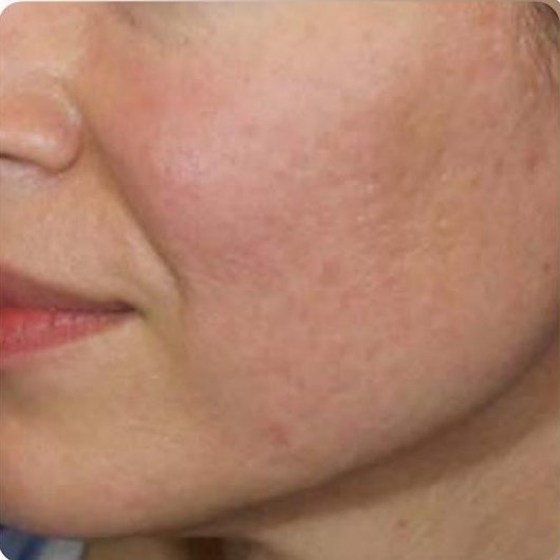
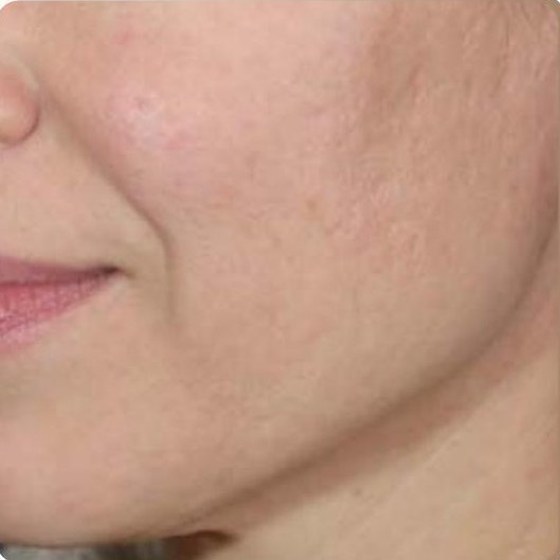
※ Photographs from Sofwave Medical clinical data; results and progress vary from person to person.
US FDA
cleared indications
Results confirmed three months after treatment in a controlled multicentre study.
The figures below come from the clinical data the manufacturer submitted for US FDA clearance.
They may differ from the Korean approval and do not guarantee a result.
60 subjects · single treatment · Fitzpatrick Wrinkle and Elastosis Scale (FWES)
80 subjects · 2 treatments · brow lifting improvement 80%
67 subjects · 3 treatments · Acne Scar Severity Grade (ASSG)
68 subjects · 2 treatments · short-term improvement
Clinical studies
Studies
Study participants
Countries
※ Clinical data published by Sofwave Medical; results and progress vary from person to person. Whether to treat, and how far, is decided after consultation with a specialist.
Lower burden and consistency, rather than one strong session
Not every case of sagging calls for a deep-layer procedure.
Depending on your condition, treating the shallow layer evenly may suit you better.
We first distinguish at the consultation whether care focused on the dermis suits you, or whether the SMAS layer needs to be addressed.
Anaesthetic cream and the device's own cooling are used together to reduce the burden during the procedure.
Planned to continue at intervals that suit your condition, rather than all at once.
Lower burden,
ample energy
How much pain you feel differs
from person to person and from area to area.
Sofwave is a procedure where discomfort can be felt during the session.
PO:VE builds an environment where it can be carried on steadily, based on an anaesthesia protocol and surface cooling.
Managing the burden this way lets the energy needed during the procedure be applied more steadily.
Considering your skin and the treatment area, the aim is to deliver as much energy as that person needs.
We wait until the anaesthesia has fully taken effect before starting, and keep checking how you feel to set the pace.
Intensity and coverage are planned in advance so that the energy needed reaches the intended depth.
Even with the same device, the settings differ from person to person. Output is divided by area — the forehead, the eye area, the jawline.
Anaesthesia too,
matched to each person
From anaesthetic cream to AirNox and sedation.
You can choose the most comfortable option together at the consultation.
PO:VE's own anaesthesia protocol sets out the application time and order in detail. When needed, a pain infusion and a nerve block injection are added to lower the burden further.
A sedation method in which a nitrous oxide and oxygen mixture is inhaled. You stay conscious while tension and the sensation of pain are lowered, and recovery is quick once inhalation stops.
A sedative is given intravenously and the treatment is carried out while you sleep. Considered when you are particularly sensitive to pain, or when a wide area is treated.
Procedure details
※ The information above is a general guide; the actual scope and course may differ with your skin condition, the area and your procedure history.
Every procedure is decided after a consultation with a specialist.
The process
The specialist checks skin thickness and the degree of sagging, then decides the scope.
The method and timing of anaesthesia are divided by area and intensity.
The specialist carries out the procedure at the planned depth and output.
We explain soothing care and home care, then review the change with you afterwards.
Frequently asked questions
How much you feel differs by person and by area.
Anaesthetic cream is used together with device cooling, and we check how you are feeling as we go.
Washing and basic make-up are possible on the day for most people.
Light redness settles naturally.
Because they work at different depths, a combination may be proposed depending on your condition.
If it is not needed, we proceed with one alone.
It depends on your condition.
We decide the number of sessions and the intervals together after a diagnosis.
Other PO:VE signatures worth seeing alongside this one.